Strengths of Our Heritage
I’ve been thinking about my religious heritage and some of the reasons I appreciate that heritage so much.
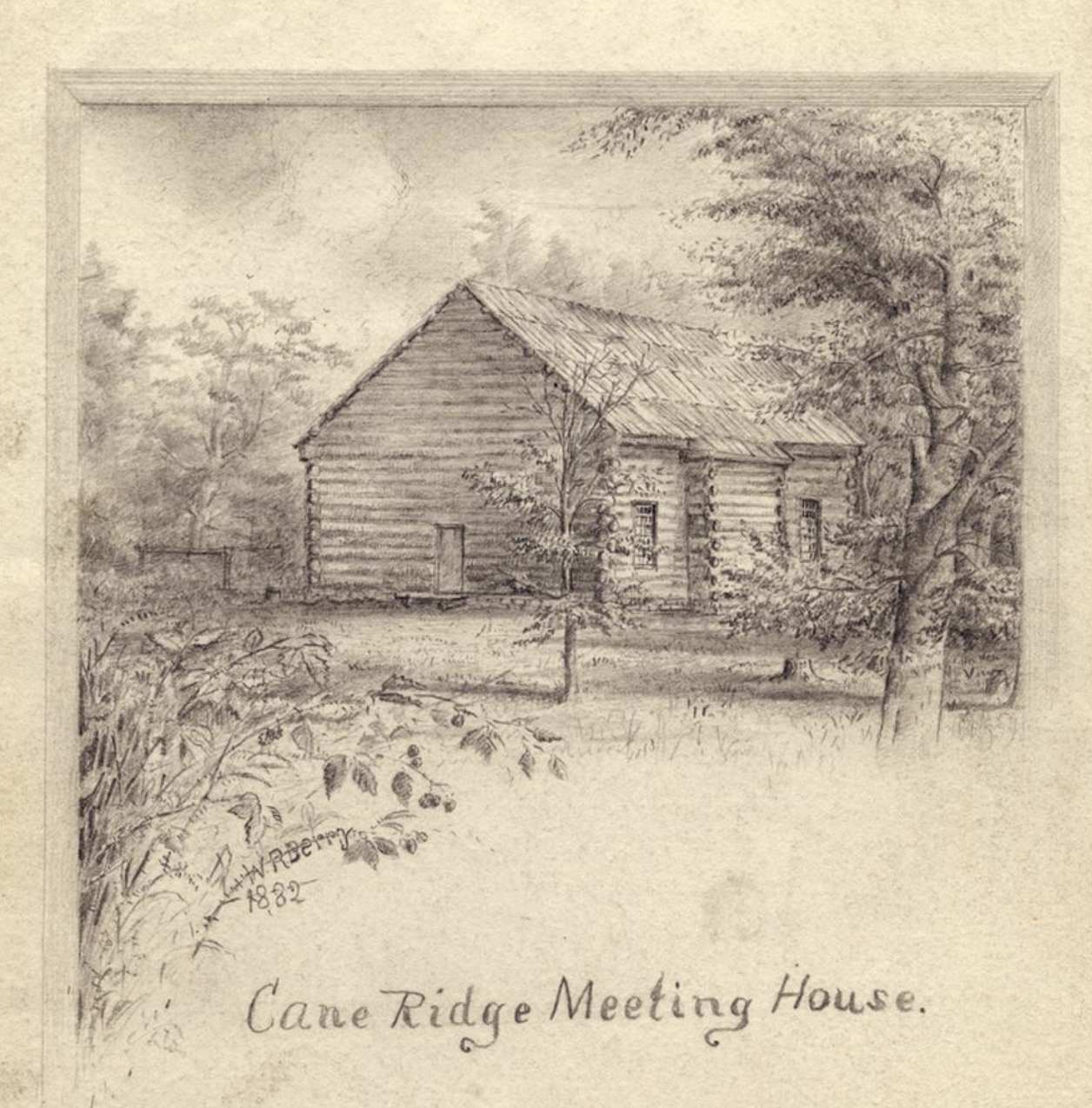
For those who may not know, my religious roots are in the nineteenth century American Restoration Movement. That movement, also known as the Stone-Campbell Movement, was an attempt to return to the pure religion of Jesus Christ.
After reading two books, Redigging the Wells: Seeking Undenominational Christianity, by Monroe Hawley, and Reclaiming a Heritage: Reflections on the Heart, Soul, & Future of Churches of Christ, by Richard Hughes, I’ve been reminded of some of the strengths of my heritage.
Please allow me to enumerate and briefly comment on what I perceive to be some of those strengths.
We have been a people of the Book.
“The Book,” I’m referring to is the Bible. Our plea has been, “Let’s go back to the Bible.” Why has this been our plea? Because we believed in its divine inspiration, authority, and all-sufficiency.
Since we believe the Bible reveals God and his will, we have regarded the Bible, as one might expect, as the norm, or standard by which followers of Jesus must be measured in every age.
Therefore, looking to the scriptures as the source for what we believe and practice seems like a wise course to pursue.
We have pled for the rejection of human creeds.
A creed is an official statement of belief, or “official” interpretation of the Bible that religious denominations often expect their adherents to affirm. “No creed but the Bible” has been one of our rallying cries.
The founders of our movement were opposed to any human creed, whether written or unwritten. For me, “human” is an important qualifier. I am not opposed to a codification or orderly arrangement of what Christians believe, as long as those beliefs are biblical. It is the demand that we adhere to human creeds that I oppose.
Believing that no man or group of men has the right to legislate for the Lord, we have refused to be bound to inflexible creeds and the opinions of men. Moreover, this means that we have advocated for the freedom of Christians to study the Bible for themselves and to change their perspective if they find that change warranted by the biblical text.
We have embraced a rational approach to the text.
Now, Richard Hughes admits there may have been times when we were so committed to a rational faith that we doubtless “have been guilty of quenching the Spirit.”
However, as he points out, our rational approach has freed us from “extremely subjective ways of reading the Bible that allow the text to mean whatever I want it to mean, given my frame of mind at the moment.” Instead, he notes, “it has encouraged us to discover what the Bible mans by discovering what the Bible meant in its original setting” (Hughes, 3-4).
Ah! A rational approach to the interpretation of scripture seeks to align what the Bible means today with what it meant “in its original setting.” I like that.
We have tried to pursue the ideal of being Christians only, while rejecting the proposition that we are the only Christians.
The early leaders of our movement eschewed sectarian Christianity. Rather than affiliate with a particular section, brand, or part of Christianity, they urged followers of Jesus to be “just Christians,” simply members of the body of Christ, nothing more and nothing less. That is, the founders of our movement urged us to be undenominational.
Also, they acknowledged that there are surely Christians in the various religious denominations and that our function is to teach the word of God and leave the judging to Jesus.
We have called for the unity of all Christians.
Early on, our movement was a unity movement. The founders and early leaders believed in the importance of Christian unity and that division was indeed, a horrid evil.
We have thought that by restoring the ancient faith—by going back to the Bible—God’s people everywhere could realize our Lord’s dream that believers might be one.
We have believed in the restoration principle.
The restoration principle is a concept that advocates a return to first century Christianity. It is a principle that values and honors the original. Why wouldn’t modern-day followers of Jesus be interested in modeling their convictions and lives according to the first presentation of the Christian faith? Going back to the original has merits. Again, to me, it seems like a wise thing to do.
Granted, people may differ on what should be restored, on what God desires that we restore. However, most likely see the value of restoring something to its original state and brilliance.
We are three hundred years removed from the early years of the American Restoration Movement. But, I ask you, don’t the strengths itemized above have a timeless appeal?
Surely there is still value in going back to the Bible to find the norm for our faith. What other standard of authority would be better than the inspired word of God?
Surely there is still value in refusing to be bound by the creeds of men, in giving people the freedom to study the Bible for themselves and granting them the freedom to change their perspective on what the Bible teaches when they find that change is warranted by the text.
Surely there is value in embracing a rational approach to the biblical text, pursuing the ideal of being Christians only, and striving for the unity of all Christians.
And, is there not value still in the dream of returning to the source of the Christian faith, to what some of the early founders of our religious heritage called “the unpolluted stream of the pure religion of Jesus Christ”?
I believe this is a dream worth struggling to keep alive!
Continue Reading